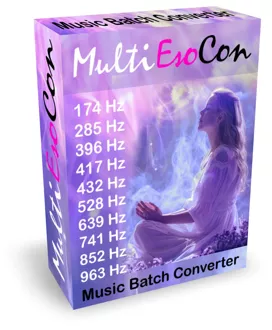
To change a tuning from 440Hz to 432Hz, use audio editing software to adjust the pitch, ensuring a harmonious sound that connects with many music enthusiasts.
For string instruments, one approach to changing 440Hz to 432Hz is to retune the strings. Musicians may lower the pitch by adjusting the tension of the strings, often using a chromatic tuner set to 432Hz. This method requires careful tuning to make certain that each string aligns with the new frequency standard. Guitarists might also use alternative tunings or capos to facilitate this adjustment, allowing for the retention of familiar chord shapes whereas achieving the desired pitch.
When working with digital audio, software applications such as Audacity or Logic Pro provide tools for pitch adjustment. After importing an audio track into the software, users can apply pitch shifting effects to lower the frequency from 440Hz to 432Hz. This process might involve selecting the entire track and using a pitch shift function, which can directly convert the frequencies for the entire audio file. Ensuring the quality of the sound may require fine-tuning after the initial adjustment.
In synthesizers, changing the pitch from 440Hz to 432Hz can be achieved through global tuning settings. Many synths allow users to adjust the master tuning, which alters the entire output of the instrument. This enables musicians to maintain harmonic coherence when layering sounds or playing alongside other instruments. Users should consult their synthesizer's manual for specific instructions on accessing and modifying these settings.
Digital sampling instruments, such as samplers and drum machines, often retain a global tuning parameter. Users can modify the pitch of individual samples or the entire output to reflect a shift from 440Hz to 432Hz. By applying a global pitch shift within the sampler's settings, musicians can secure that any imported audio or sample matches the new frequency. This approach is particularly useful in electronic music production, where maintaining consistency across layers is crucial.
Live performances may require real-time adjustments to accommodate the 432Hz tuning. Musicians can use pedal tuners or clip-on tuners designed to display the reference pitch. These devices enable quick and accurate adjustments during rehearsals and performances. Musicians should communicate the tuning changes to all members of the ensemble to guarantee a cohesive sound that aligns with the 432Hz standard.
A unique characteristic of a 432Hz converter is its ability to create a more soothing and calming sound, improving listener experience through natural frequency alignments.
One prominent feature of the 432Hz converter is its precision in frequency adjustment. Unlike basic pitch shifting tools, this converter especially targets the 432 Hz frequency, ensuring that the output maintains the intended auditory quality. This precision allows for a faithful representation of musical pieces, strengthening the listening experience without distorting the original sound. Users can appreciate the clarity and depth of music adjusted to this frequency, often reporting a more profound connection to the audio content.
In terms of technical functionality, the 432Hz converter employs advanced algorithms to realign audio signals. These algorithms analyze the input sound waves and accurately shift them to the desired frequency. The process involves careful calculations to maintain the integrity of the sound, preserving dynamics and tonal balance. The result is a unbroken transition from standard tuning to the 432 Hz standard, enabling a rich listening experience that feels organic.
The 432Hz converter also offers versatility in its application. Musicians and sound designers can utilize it across a range of audio content, from instrumental tracks to vocal performances. By incorporating this converter, artists can experiment with different genres while maintaining a consistent tuning standard. This adaptability allows for creative exploration though adhering to specific sonic principles associated with 432 Hz.
Another notable characteristic is its user interface, which is designed for accessibility. Many 432Hz converters feature intuitive controls, enabling users to engage with the software smoothly. This ease of use makes it suitable for both professionals and beginners. The interface typically includes visual feedback for real-time monitoring of adjustments, boosting the user experience and facilitating precise editing.
The impact of the 432Hz converter extends beyond mere frequency alteration. Users report changes in emotional response and state of mind when listening to music tuned to this frequency. This phenomenon has garnered interest in therapeutic and wellness communities, where sound healing practices utilize 432 Hz as a healing tool. The converter thus serves not only as a technical device but also as a means of investigating the psychological effects of sound on human wellbeing.
For producers, the 432Hz converter offers an innovative tool to investigate thoroughly new sonic landscapes, allowing them to create music that feels more connected and spiritually enriching.
One significant aspect of the 432 Hz converter for producers involves its integration into various DAWs. Popular software such as Ableton Live, Logic Pro, and FL Studio include tools or third-party plugins designed particularly for this purpose. Producers can quickly apply these converters to individual tracks or entire projects, ensuring a cohesive sound that adheres to the desired tuning preference. The flexibility of these converters allows for real-time adjustments, which can be particularly beneficial during live performances or recording sessions.
The audibility of the differences between 432 Hz and 440 Hz can vary among listeners. Some producers advocate for the use of 432 Hz as a result of its purported calming effects and improved listening experience. Whereas scientific studies on the psychological impacts of different frequencies are limited, anecdotal evidence often drives the preference for 432 Hz in certain genres, such as ambient, new age, or meditation music. Producers targeting these audiences may find the 432 Hz converter for producers particularly valuable in creating a more engaging auditory experience.
The use of a 432 Hz converter for producers is not solely for music production; it can also improve sound design and effects. By applying this frequency adjustment to sound effects or environmental sounds, producers can create a more immersive atmosphere within their projects. This feature is especially useful in film scoring and video game audio design, where the emotional response to sound is crucial. The ability to manipulate frequencies can lead to unique compositions that set a specific tone or mood.
Compatibility with various audio formats is another important consideration for the 432 Hz converter for producers. Many converters offer support for both digital and analog formats, allowing producers to retain quality during the conversion process. This flexibility ensures that producers can incorporate elements from different sound libraries or recordings without compromising audio integrity. Retaining high fidelity meanwhile adjusting frequencies is essential to maintaining professional standards in music production.
The workflow enhancement provided by the 432 Hz converter also influences collaboration among producers. When working in teams, having a standardized tuning can facilitate smoother exchanges and integrations of various audio tracks. This becomes particularly significant in collaborative projects where producers may have differing preferences for tuning and sound design. Utilizing a common tool helps to unify the sound during respecting individual creative contributions.
Common errors with a 432Hz converter include improper calibration, neglecting to adjust the entire track, and failing to evaluate the impact on harmonics and overall sound quality.
Another mistake involves failing to contemplate the specific characteristics of the audio material. Different genres and instruments can react differently to tuning changes. For instance, a classical piece may need more careful handling during conversion compared to a synthesized track. Inappropriate alterations can lead to a loss of harmony or articulation in the music. Users should assess the audio content before applying the 432 Hz converter to confirm compatibility and musicality.
Not applying sufficient quality control post-conversion constitutes another error. After using a 432 Hz converter, it is indispensable to listen to the final product for any anomalies. These may include distortion, irregular frequency responses, or unintended artifacts that might affect the listening experience. Skipping this step can result in distributing or using audio that does not meet quality standards. Audio professionals particularly must implement rigorous testing to assure fidelity in the converted sound.
Moreover, misunderstanding the impact of the 432 Hz tuning on listener perception can lead to misguided expectations. Some believe that 432 Hz has healing properties or a more harmonious effect on the listener. Despite subjective experiences vary widely, relying solely on these beliefs without proper validation can skew the intended purpose of the audio. It is indispensable to ground expectations in technical realities rather than anecdotal claims when using a 432 Hz converter.
A frequent oversight is the use of inappropriate software or tools for conversion. Many available converters vary in quality and accuracy. Using subpar software may not yield an authentic 432 Hz sound. It is recommended to research and select reputable tools that maintain audio integrity whereas performing the conversion. High-quality converters preserve the nuances of the original track, leading to a more satisfying listening experience.
Failing to back up original audio files before conversion is another common mistake. Converting audio files changes their properties permanently, and accidental errors during this process may lead to irreversible loss of the original sound. Maintaining copies of the original files ensures that there is no risk involved should the conversion not meet expectations. This practice can save significant time and effort in the long run.