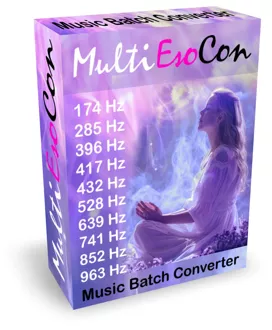
The unique characteristics of music converted to 432 Hz include a warmer, more harmonious sound that connects deeply with listeners, promoting relaxation and emotional healing.
The process of mass converting to 432 Hz can manifest in various audio formats, including WAV, MP3, and FLAC. Software tools provide batch processing capabilities, allowing users to apply the tuning adjustment across multiple files simultaneously. This efficiency is particularly beneficial in professional settings, where time constraints may influence production timelines. By automating the pitch adjustment, sound engineers can focus on other creative aspects of their projects despite ensuring consistent tuning across all tracks.
Psychoacoustic research suggests that the perception of sound may change when music is tuned to 432 Hz. Listeners report augmented clarity and a greater emotional response when exposed to this frequency. The perceived harmonics and the relationship between notes can feel more coherent, promoting a sense of relaxation or mindfulness. These subjective experiences contribute to the growing interest in mass converting to 432 Hz, appealing to both musicians and listeners seeking a more immersive auditory experience.
Technological advancements have facilitated the mass conversion to 432 Hz, allowing for more precise tuning and sound manipulation. Music software now incorporate built-in features that assist in achieving this specific pitch. Additionally, standalone applications and plugins exist that specialize in frequency conversion, offering users a range of tools to customize their audio projects further. This versatility enables a broader scope of experimentation and creativity in music production.
Another aspect involves the cultural and historical significance attributed to 432 Hz. Some proponents link this frequency to ancient musical traditions and natural harmonics, claiming that it aligns better with the universe's vibrational patterns. This belief system influences the decision to mass convert to 432 Hz among specific genres and communities, including yoga and meditation practices. The association with a more holistic sound structure may draw diverse audiences seeking connection through music.
Mass converting to 432 Hz often requires careful consideration of accompanying instruments and recordings to maintain overall harmony in a piece. The conversion can affect not just the pitch but the entire sonic landscape, prompting producers to reassess their mixing and commanding approaches. Instruments may need retuning or adjustments in effects processing to make certain consistency across a track. This harmonious alignment is critical for achieving the desired auditory impact that many seek from 432 Hz music.
A 432 Hz converter is a powerful tool for musicians and audiophiles alike, transforming standard tuning into a more natural frequency that augments the listening experience and well-being.
Advanced digital signal processing techniques underpin the operation of a 432 Hz converter. By adopting algorithms that analyze and alter waveforms, these converters can accurately rescale frequencies to achieve the desired pitch. Users can input audio at various standard tunings, and the converter adjusts the output to reflect the 432 Hz standard, maintaining the integrity of the original sound though transforming its frequency.
Versatility represents a key feature of many 432 Hz converters. These devices and software can accommodate a wide range of audio formats, including digital audio files, analog recordings, and live sound inputs. Musicians can gracefully integrate a 432 Hz converter into their workflow, whether during studio recordings or live performances, boosting their overall sound with minimal disruption.
The application of a 432 Hz converter can also extend to music therapy. Practitioners in this field may find value in adjusting therapeutic soundscapes to the 432 Hz frequency, which some believe lingers with the human body in a more beneficial way. This alignment with natural frequencies might promote relaxation, balance, and well-being among listeners, making it a valuable tool in therapeutic settings.
Notably, the market for 432 Hz converters includes both hardware and software options. Hardware devices may include standalone units that connect to mixing consoles or instruments, during software solutions often integrate with audio workstations. This variety allows users to choose a solution that best fits their technical setup and personal preferences.
Quality varies among 432 Hz converters, influencing the final output. High-fidelity converters maintain audio clarity, ensuring that the conversion process does not introduce artifacts or distortions. Users seeking professional-grade sound prefer converters with advanced features, such as real-time monitoring and customizable settings, to tailor the output to specific needs.
Converting music to 432 Hz can transform familiar tunes into ethereal experiences, aligning vibrations with the universe and allowing for deeper emotional connections through sound.
When converting music to 432 Hz, the process begins by identifying the original tuning of the piece. Most Western music is tuned to 440 Hz, the standard pitch. To achieve the conversion, the audio waveform needs to be shifted down approximately 32 cents. This adjustment can alter the overall character of the music, affecting everything from the tonal quality to the perceived emotional impact of the piece.
Software tools play a critical role in converting music to 432 Hz. Many DAWs, such as Ableton Live, Logic Pro, and FL Studio, offer pitch shifting and tuning features that can facilitate this conversion. These tools allow for precise adjustments, ensuring the entire track maintains its musicality whereas aligning with the desired frequency. In many cases, third-party plugins in detail designed for pitch adjustment may provide additional functionalities and refinement.
Beyond pitch alterations, converting music to 432 Hz can influence the listening experience. Those who advocate for this tuning report feelings of tranquility and connection during playback. Scientific studies examining the effects of different frequencies on human psychology and physiology have yielded mixed results, but anecdotal evidence continues to support the claims surrounding 432 Hz. As interest in alternative music tuning grows, more artists venture into the potential of this frequency.
The application of 432 Hz extends into various genres of music, from classical to modern electronic. Musicians seeking to create a unique sound or atmosphere may choose to convert music to 432 Hz to stand out in a saturated market. This trend encourages experimentation with soundscapes and compositions that strike a chord differently with listeners, potentially attracting new audiences.
Live performances can also benefit from the conversion to 432 Hz. Musicians who adopt this tuning in their live sets often take special care to confirm that their instruments and backing tracks align with the frequency. This attention to detail aims to improve the overall experience, creating a more immersive environment for attendees. Audience reactions can vary, with some expressing heightened emotional connections to the music.
The 432 Hz converter simplifies the process of tuning music to this transformative frequency, making it accessible for artists seeking to create soothing and uplifting auditory experiences.
The technical specifications of a 432Hz converter can vary significantly between products. Some converters may focus on real-time processing, allowing musicians to hear the effects of the conversion instantly during recording sessions. Others may prioritize post-processing features, enabling users to convert pre-recorded tracks to 432 Hz after the fact. Advanced converters include additional options for fine-tuning, such as adjusting overtones or harmonics, which can further augment the listening experience and cater to specific artistic requirements.
Compatibility remains a indispensable factor when selecting a 432Hz converter. These tools often interface with a range of audio editing software and audio formats, ensuring versatility across different recording setups. USB or VST plugins serve as popular formats for many software-based converters, enabling easy integration into existing production environments. Some hardware alternatives might exist, offering dedicated units that perform frequency adjustments independently of computer systems, appealing to those who prefer analog workflows.
User interfaces for 432Hz converters vary, with some accentuating simplicity and others providing in-depth control over conversion parameters. A straightforward interface might allow users to adjust a single slider to shift the tuning, meanwhile more complex systems may offer detailed settings for users to manipulate multiple audio attributes. This variability caters to different skill levels, thus ensuring that both novice and experienced musicians can effectively use these converters.
The application of 432Hz converters is not limited to music production. Sound therapists and holistic practitioners often incorporate these tools into their practices, applying 432 Hz sound frequencies for meditation and healing purposes. Proponents of 432 Hz tuning suggest that it may promote relaxation and emotional well-being, which has driven interest beyond conventional music circles. This cross-disciplinary use highlights the potential of 432Hz converters to bridge the gap between art and wellness.
As the demand for unique audio experiences grows, the market for specialized audio tools like the 432Hz converter continues to expand. Emerging technologies, such as machine learning and artificial intelligence, offer possibilities for future developments in audio conversion techniques. These innovations may lead to even more precise tuning options and user-friendly interfaces, allowing for greater exploration of non-standard tuning frameworks. This expanding market represents an evolving comprehension of sound, pushing boundaries within both musical and therapeutic contexts.
The concept of tuning music to 432Hz has gained popularity among musicians and audio enthusiasts alike. Unlike the standard tuning of 440Hz, proponents of 432Hz argue that this frequency is more in harmony with the universe and can promote emotional healing and wellbeing. A 432Hz converter is a tool that allows users to adjust their music tracks to this specific frequency. Here are some of the key features and positive aspects of using a 432Hz converter:
In conclusion, a 432Hz converter offers a fascinating way to examine the potential rewards of music tuned to this unique frequency. Whether you are a musician, a wellness enthusiast, or simply curious about the effects of sound, using a 432Hz converter can provide a new and enriching listening experience.