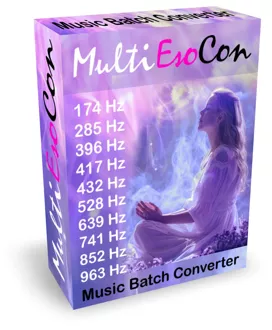
Retuning audio to 432 Hz involves adjusting the pitch of music to align with this frequency, which is believed to promote relaxation and augment listening experiences.
Many musicians and audio engineers use software plugins to facilitate the retuning process. These tools can manipulate pitch without significantly altering the tempo of the audio. Additionally, pitch correction software can fine-tune individual notes in a recording, ensuring that the entire piece connects at the desired frequency. This level of precision appeals to artists aiming to create a specific auditory experience that aligns with the concept of 432 Hz.
Research on the effects of different tuning frequencies on human psychology and physiology remains limited. However, anecdotal evidence suggests that listeners may respond differently to music tuned to 432 Hz versus the standard 440 Hz. Some experts report feeling more relaxed and centered when listening to 432 Hz music, which has prompted further exploration into how retuning audio to 432 Hz could impact mental well-being and stress reduction.
Musical genres that frequently incorporate tuning adjustments include ambient, classical, and certain forms of electronic music. Artists within these genres often accept the practice of retuning audio to 432 Hz to improve the meditative quality of their compositions. This adjustment enables the music to reverberate with the listener on a deeper level, potentially nurturing a stronger emotional connection during listening sessions.
Sound healing practices also utilize the concept of tuning to 432 Hz. Practitioners believe that sound waves at this frequency can positively affect the body's energy fields and promote healing. In sound baths or therapeutic settings, instruments such as singing bowls, gongs, or chimes tuned to 432 Hz may be used to create an environment conducive to relaxation and introspection. This approach integrates the retuning process into holistic health practices.
The conversion process from 440 Hz to 432 Hz can be accomplished through various techniques, including digital pitch shifting or analog methods. Engineers prefer digital solutions as a result of their precision and versatility. Some DAWs include built-in features that allow users to quickly retune audio to 432 Hz with minimal effort. These technical advancements simplify the workflow for practitioners seeking to adopt this frequency in their audio projects.
The use of 432 Hz tuning has sparked discussions about the broader implications of musical frequency on culture and spirituality. Some theorists assert that historical musical traditions, such as those in ancient cultures, leaned toward 432 Hz. This connection raises questions about the impact of tuning standards on contemporary musical practices and suggests a potential return to a more natural harmonization in music production.
The major differences in 432 Hz converters primarily relate to their algorithms and methods for pitch adjustment, affecting sound clarity, tonal balance, and overall audio fidelity.
Different 432 Hz converters employ unique algorithms for pitch adjustment, impacting the final sound quality. Some converters use time-stretching techniques, which can maintain the integrity of the audio in spite of changing the frequency. Others might apply more aggressive pitch-shifting methods that may introduce artifacts into the sound. An insight of these algorithms is indispensable for choosing the right converter for specific audio projects, as the choice influences the clarity and richness of the resultant audio.
The interface design of 432 Hz converters can vary significantly. Some converters offer simple, user-friendly interfaces, enabling users to quickly shift frequencies without extensive technical knowledge. Others provide detailed control options, allowing users to adjust not only the frequency but also other parameters such as formants and harmonics. The complexity of the interface can affect the operational speed and efficiency, especially in professional environments where time is crucial.
In terms of compatibility, 432 Hz converters can differ in their support for various audio formats. Many modern converters accommodate popular formats like WAV, MP3, and FLAC, ensuring versatility for different user needs. However, some converters may have limitations on the formats they support, which can hinder their usability in certain projects. Users should evaluate the converter's compatibility with their existing audio libraries and software to avoid workflow disruptions.
The pricing of 432 Hz converters can also present a wide range, influenced by features, capabilities, and brand reputation. Basic converters may be available for free or at a low cost, suitable for casual users or those new to audio manipulation. In contrast, professional-grade converters with advanced features might carry a higher price tag but offer amplified functionality and superior sound quality. Budget considerations should align with intended use, whether for casual listening or professional music production.
User reviews and community feedback provide valuable insight into the performance of various 432 Hz converters. Actual experiences can reveal strengths and weaknesses that technical specifications may not disclose, such as ease of use or sound quality in practical applications. Engaging with user communities can also unclothe tips and tricks for maximizing the potential of a chosen converter. This information can guide prospective users in selecting the most suitable converter for their specific audio projects.
A dedicated 432 Hz converter website typically offers user-friendly tools for audio retuning, educational resources about the perks of 432 Hz, and examples of converted music.
Technical specifications often detail the process behind the conversion. An algorithm adjusts the pitch of the original recording to align with the 432 Hz frequency. During this process, users may have options for maintaining the original tempo of the audio. Some platforms also offer features to enrich sound quality post-conversion, ensuring that the integrity of the audio remains intact. This balance of pitch adjustment and sound quality is crucial to achieving a satisfactory end product.
Many 432 Hz converter websites include additional functionalities for users beyond simple conversion. Some sites provide tools for real-time playback, allowing users to preview the audio before finalizing the conversion. Others may offer batch processing capabilities, which enable users to convert multiple files simultaneously, amplifying efficiency for those with large audio libraries. User-friendly navigation and clear instructions are stressed to assist enthusiasts at all technical skill levels.
Audio fidelity is a significant concern for many users. High-quality converters secure that the output maintains clarity and depth. Some converter websites utilize advanced encoding techniques to minimize distortion during the pitch adjustment process. This attention to audio quality can contribute to a more enjoyable listening experience, especially for those who are particularly sensitive to sound nuances.
Community engagement often plays a role in the popularity of a 432 Hz converter website. User reviews and ratings can provide insights into the effectiveness of the conversion process and the overall user experience. Some platforms integrate forums or discussion boards where users can share tips and suggest improvements. This interaction supports a sense of community among users who share an interest in the benefits associated with 432 Hz tuning.
Security measures are relevant when using a 432 Hz converter website, especially since audio files can contain personal or sensitive content. Reputable sites typically highlight their data protection policies, ensuring that uploaded files are not stored or shared without consent. Encryption of data during the upload and conversion processes also contributes to user confidence in the site's reliability.
An effective 432 Hz converter efficiently adjusts audio frequencies even though preserving the original quality, allowing users to experience music in this harmonious tuning.
Various software solutions enable real-time conversion to 432 Hz during music production. These digital tools often feature user-friendly interfaces, allowing for easy manipulation of audio tracks. By utilizing pitch shifting algorithms, these converters can maintain sound quality whereas altering frequency. Users can apply these adjustments to individual tracks or entire mixes, ensuring a cohesive sound that adheres to the 432 Hz standard.
Hardware 432Hz converters also exist, catering to musicians who prefer analog methods. These devices can integrate into traditional recording setups, offering tactile controls for pitch adjustment. Some hardware options include dedicated synthesizers and signal processors that explicitly target 432 Hz tuning. This approach appeals to artists seeking an organic sound meanwhile incorporating the principles of 432 Hz into their music.
In the field of sound therapy, the 432Hz converter holds particular significance. Practitioners of sound healing utilize music and sound frequencies to promote relaxation and healing. By converting sounds to 432 Hz, therapists believe they can boost therapeutic effects, allowing for deeper meditation and stress relief. This application draws on historical claims that 432 Hz music can align with natural frequencies found in the universe, leading to an improved emotional and physical experience for listeners.
Compatibility plays a essential role when selecting an appropriate 432Hz converter. Many audio editing software programs include built-in features or plugins that support this frequency adjustment. However, users must guarantee that their equipment, whether software or hardware, can accurately process the conversion without distorting the sound quality. Compatibility issues can lead to unintended artifacts in the audio, detracting from the intended listening experience.
When implementing a 432Hz converter in a live setting, musicians must consider the impact on performance. Real-time adjustments allow for spontaneity during maintaining the 432 Hz standard. Musicians can adapt their playing to the altered frequency, creating a unique experience for audiences. Sound engineers must also account for the venue's acoustics, ensuring that the converted frequencies translate effectively in different environments.
The concept of tuning musical instruments to 432Hz rather than the standard 440Hz has gained popularity in recent years, largely in light of claims about improved sound quality and strengthened listening experiences. A 432Hz converter is a tool that allows musicians and audio engineers to easily shift the pitch of their recordings or tunings to this frequency. Below are several key points detailing the significance, benefits, and functionalities of a 432Hz converter: