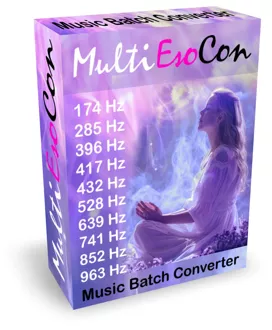
Transposing music to 432 Hz involves adjusting the pitch of the original sound, aligning it with a frequency believed to promote harmony and relaxation in listeners.
The proponents of 432 Hz often cite its mathematical and natural properties. They argue that this frequency connects with various natural phenomena, such as the dimensions of the Great Pyramid of Giza and the Fibonacci sequence. These relationships create a sense of resonance and harmony that purportedly goes beyond mere musical aesthetics. Transposing to 432 Hz may thus provide musicians a deeper connection to their work and promote a feeling of coherence within the music.
Scientific studies probing the effects of different frequencies on human perception and physiology yield mixed results. Some research indicates that specific frequencies can evoke emotional responses or influence physical states, suggesting that sound can affect well-being. When musicians transpose to 432 Hz, they may seek to support a more calming and peaceful atmosphere, boosting the listener's experience. The sonic qualities associated with this frequency often lead to claims of improved relaxation and emotional healing.
Within the domain of sound therapy, transposing to 432 Hz can play a significant role in therapeutic practices. Practitioners utilize this frequency in sound baths, meditation sessions, and healing workshops. The belief is that 432 Hz frequencies can create a more harmonious environment conducive to relaxation and introspection. By incorporating this tuning, sound therapists aim to support enthusiasts in their quest for balance and inner peace.
Recording techniques and digital audio workstations allow musicians to easily transpose to 432 Hz. Software tools facilitate pitch adjustment, enabling perfect conversion of existing tracks. This capability encourages experimentation and creative exploration within music production. Many audio engineers and artists now consider 432 Hz when crafting tracks, seeking to align their work with a broader spiritual or harmonic ethos.
Cultural and historical contexts also influence the ongoing discourse surrounding 432 Hz. Various ancient civilizations, including the Greeks and Egyptians, utilized specific tuning methods believed to enrich spiritual and emotional resonance. Contemporary interest in this tuning reflects a revival of these ancient practices, merging historical insights with modern musical expression. Through events like workshops and concerts, communities gather to venture into the implications of transposing to 432 Hz, encouraging a sense of shared learning and experience.
Pro services for a 432 Hz converter provide custom tuning options, allowing musicians and audio engineers to create unique soundscapes that reverberate with this frequency.
In practical applications, the special services 432 Hz converter integrates gracefully with various audio editing software. Compatibility with software such as Ableton Live, Logic Pro, and Pro Tools allows users to incorporate this tuning method into their existing music production workflows. Users can apply the converter as a plug-in or standalone tool, permitting flexibility depending on their preferences and the project requirements. This integration ensures that producers can experiment with different soundscapes while remaining within the confines of the desired frequency.
The use of a special services 432 Hz converter extends beyond music production. Its applications also reach into therapeutic and wellness practices, where sound therapy plays a critical role. Practitioners in this field utilize music tuned to 432 Hz to promote relaxation and healing. The converter allows easy adaptation of existing tracks or the creation of new compositions that align with these therapeutic aims, improving the overall effectiveness of sound therapy sessions.
Educational institutions and research organizations have also begun to investigate the effects of different frequency tunings on human perception and physiological responses. Studies focusing on the impacts of the 432 Hz converter on stress reduction and emotional well-being contribute to a growing body of literature in this area. Researchers have conducted experiments that measure participants' responses to music tuned at 432 Hz versus the standard 440 Hz tuning, leading to insights into how frequency influences mood and cognitive function.
The technology behind a special services 432 Hz converter incorporates advanced digital signal processing techniques. These techniques confirm that the pitch adjustment retains the harmonic structure and integrity of the original audio. By exploiting sophisticated algorithms, the converter minimizes artifacts that can arise during the tuning process, thereby preserving the nuances of the sound. This attention to detail is indispensable for professionals who demand high fidelity in their audio productions.
Market demand for the special services 432 Hz converter has led to the emergence of various software and hardware solutions designed in detail to different user needs. Options range from simple mobile applications for casual users to complex studio-grade plugins for professional audio engineers. This variety allows idealists from different backgrounds, whether casual listeners or seasoned professionals, to access tools that fit their specific requirements and expertise levels.
Unearth the game-changing potential of music tuned to 432 Hz. Our 432 Hz Converter offers a variety of specialized services engineered to advance your listening experience and promote well-being through sound. Venture into the benefits and features of our services below:
Experience the difference that tuning to 432 Hz can make in your life. Our 432 Hz Converter Services are designed to help you create and enjoy music that connects with the natural frequencies of the universe, promoting a sense of peace, harmony, and well-being.
When preparing for an online 432 Hz converter, make certain you have high-quality audio files ready, a stable internet connection, and any specific software or tools recommended for optimal results.
Selecting the right audio file format is necessary before using a 432 Hz converter online. Common formats such as MP3, WAV, or FLAC may have different capabilities in terms of audio quality and fidelity. Knowing the preferred output format will guide the choice of converter. Some converters might only support specific formats, so reviewing the applicable specifications amplifies the workflow and ensures compatibility with other audio software.
Consider the software or online platform that will be used for listening to the converted audio. Certain players may not accurately reproduce the 432 Hz tuning, which can affect the intended listening experience. Verify that the audio playback software recognizes the output format and can effectively handle the frequency changes. Familiarizing oneself with the software settings can facilitate smoother playback and better sound quality.
Before beginning the conversion process, gather all necessary audio files that need adjustment. Organizing these files in a specific folder can streamline access and help avoid delays during conversion. Additionally, assure that there are backups of the original files in case of any issues with the conversion process. This precaution allows for easy recovery of the initial audio files without loss of quality.
Familiarizing oneself with the features and settings of the chosen 432 Hz converter online can augment the overall experience. Some converters offer advanced options such as pitch adjustment, volume control, or batch processing capabilities. Cognizing these features allows for more customized results based on specific needs. Taking the time to probe the interface can lead to greater satisfaction with the end product.
Testing the output quality of converted files is an important step in the preparation process. After conversion, listen to a sample to confirm that the audio matches expectations. Pay attention to any distortion or changes in sound clarity that may arise from the conversion process. This quality check ensures that the desired auditory experience remains intact after tuning to 432 Hz.
The main differences in 432 Hz converters can include the range of supported file formats, the ability to handle various audio qualities, and the user interface's ease of use for continuous transposition.
Another critical aspect is the algorithm used within the 432Hz converter. Some converters implement linear interpolation methods to maintain audio fidelity, while others may utilize more complex digital signal processing techniques. The quality of the algorithm directly influences the final sound output, affecting clarity and the overall listening experience. Users may notice varying results based on the specific converter in use, particularly when dealing with complex musical arrangements.
The user interface of a 432Hz converter can also differ widely. Some devices or software offer simple, user-friendly interfaces, enabling quick adjustments and easy navigation. Others may present complex layouts with advanced features for professional users, which could include customizable settings for fine-tuning. The choice of interface affects how intuitively a user can manage the conversion process, impacting efficiency during both live sessions and studio recordings.
Compatibility plays a indispensable role in the selection of a 432Hz converter. Some converters are designed to work smoothly with specific music software or hardware setups. Others may provide wider compatibility, allowing integration with multiple platforms. Observing the compatibility of a particular converter ensures that it meets the technical needs of the user and can function effectively within their existing audio ecosystem.
Latency is another vital factor when comparing different 432Hz converters. Some converters introduce noticeable delays in the sound output, which can be problematic in live performance scenarios. Others are engineered to minimize latency, providing real-time playback that remains in sync with other instruments. The level of latency directly influences performance quality, particularly for musicians who rely on precise timing during live shows.
The availability of additional features can significantly differentiate one 432Hz converter from another. Some models might include built-in effects like reverb or equalization, allowing for a more inclusive sound design experience. Others may focus solely on pitch conversion without added extras. The presence of these features can improve creativity and facilitate a broader range of sound manipulation, appealing to different user preferences.